
Student-aggression injuries to teachers and educational assistants in Canadian classrooms — and why special-education staff are hit hardest.
In classrooms across Canada, a workplace-safety problem has been quietly normalised: education workers — and especially the educational assistants who support students with the highest needs — are hit, kicked, scratched and bitten on the job. Canadian unions and researchers have documented it in detail. This page compiles the most credible data, each figure linked to source. Because nearly every dataset relies on reported incidents, the real numbers are higher — these are conservative floors.
In a 2025 survey of more than 12,000 Ontario education workers, 98% of educational assistants reported experiencing violent or disruptive incidents at work — and 59% said it happens every day. (CUPE — union survey)
Education has become one of Canada’s most dangerous sectors for workplace violence.
A 2025 University-of-Ottawa-led report, Running on Fumes, documented thousands of violent incidents reported by nearly 6,000 Ontario education workers — evidence the problem is persistent and worsening.
The pattern in the strongest research is consistent — the staff most likely to be injured aren’t teachers in general, but the educational assistants and special-education staff working closest to students with complex behavioural needs. Peer-reviewed North American workers’-compensation data found special-education assistants are injured by students at roughly six times the rate of licensed teachers — the highest injury rate of any staff group.
No Canadian dataset isolates biting as its own figure — incidents are logged as “physical violence” or “assault.” But biting recurs in how workers describe the job: the Ontario study lists being hit, kicked, scratched, bitten and spat at among routine experiences. For staff supporting students with self-injurious or aggressive behaviours, bites, scratches and grabs to the arms and hands are among the most common injuries.
Every figure here depends on incidents being reported — to an employer, a WSIB or WorkSafe board, or a survey. Canadian researchers repeatedly note that many never are, often because staff have come to see them as normal. These statistics understate the problem.
It’s not just Canada. In the United States, teachers face workplace violence at about double the all-occupations rate (BLS), and 6% are threatened or 4% physically attacked by a student in a year (NCES). In Australia, peer-reviewed data finds special educators and aides carry the highest injury risk; in New Zealand, 26.8% of primary teachers reported physical violence in a year.
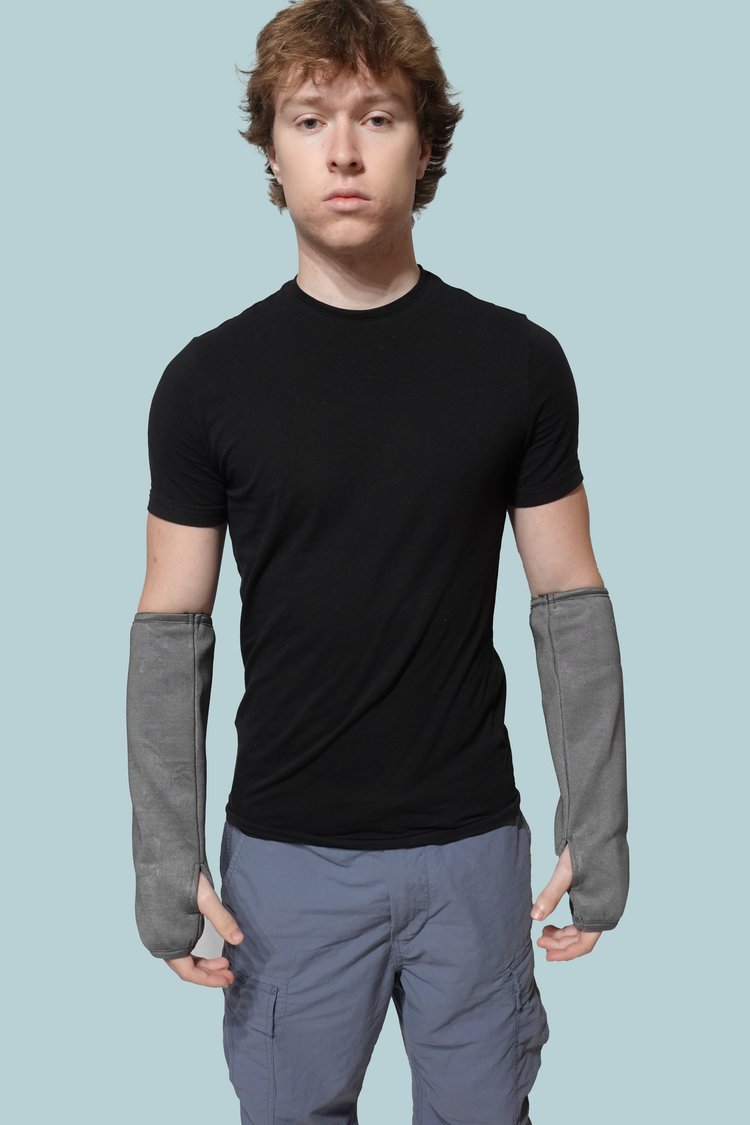
There’s no single fix — adequate staffing, training, behaviour-support and de-escalation plans, and prompt reporting all matter. For staff in the highest-risk roles, personal protective equipment matched to the actual injuries helps. The gear below is built for Canadian classrooms and care settings, priced in CAD:

- 2025 CUPE survey of 12,000+ Ontario education workers (self-selected union survey).
- University of Ottawa / CUPE, In Harm’s Way (2018-19) and Running on Fumes (2025).
- WorkSafeBC workplace-violence claims by sector (reported by CBC).
- Schofield et al., special-education staff injury risk (peer-reviewed, Minnesota).
- U.S. Bureau of Labor Statistics; U.S. NCES.
- Gray et al., Australian education-sector injury claims; Rahimi et al., New Zealand primary teachers.
Figures reflect the most recent data available from each source and are conservative given known under-reporting. Union-survey figures are self-selected and attributed accordingly. Last reviewed June 2026.